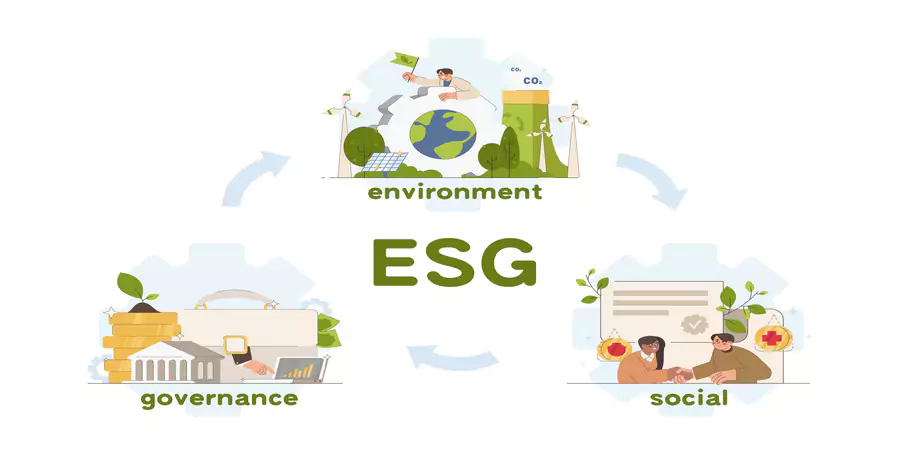
Over the last ten years, Environmental, Social, and Governance (ESG) practices have changed from being something companies could choose to do to being a key part of their business strategy. What started as a push for openness has now become a key factor in business success and long-term survival. But as the world economy faces more and more social and environmental problems, ESG’s focus is changing again. In the next ten years, we need to go beyond just reporting and start making a difference that can be measured. Companies that embrace this change will not only improve their reputations, but they will also make the world a better place for people and the planet.
The Growth of ESG
ESG was mostly about disclosure in its early years. Companies were supposed to keep track of their greenhouse gas emissions, publish sustainability reports, and share statistics on diversity. The goal was to give investors and regulators a better idea of how well the company was doing outside of its finances. But this part of ESG was mostly about following the rules instead of making changes. Instead of being a strategic necessity, many organizations saw it as a way to communicate.
It’s becoming clear today that that method has some problems. Reporting is still important for holding people accountable, but stakeholders now want to see real progress. People who buy things, work for companies, and invest in them want to see proof that ESG efforts are making a real difference. So, the next chapter in ESG isn’t about what companies say; it’s about what they do and how well they do it.
Moving from Measurement to Action
Companies need to stop measuring outputs and start measuring outcomes as the focus shifts to real impact. For example, businesses can’t just say how much energy they use; they also have to show how they are cutting carbon emissions and making things more efficient. Instead of just giving diversity numbers, organizations should show how their policies that include everyone are making things better for groups that aren’t well represented. Because of this change, ESG principles need to be a part of every part of business strategy.
Digital technology will be very important in this change. Organizations can keep an eye on their environmental and social performance in real time thanks to the Internet of Things, big data analytics, and artificial intelligence. These technologies make it possible to keep track of energy use, supply chain practices, and the health of workers with great accuracy. Companies can go from reactive management to proactive sustainability by using data to find problems and chances.
The Role of Rules and Responsibility
Governments and regulatory bodies are also speeding up the change from reporting to impact. Sustainability reporting standards are getting stricter and more in line with each other all over the world. The European Union’s Corporate Sustainability Reporting Directive and the International Sustainability Standards Board are setting new standards for how companies should report their activities. But the focus is slowly shifting from just gathering data to checking results.
Because of this change, companies have to make sure that their ESG claims are true and can be checked. Regulators, investors, and the public are paying more attention to greenwashing and shallow promises. To keep people’s trust, businesses need to show that they are making real progress on what they say they will do. Independent audits, clear methods, and trustworthy third-party certifications will be very important for proving authenticity and accountability.
Putting ESG into the Main Business Plan
ESG needs to be a part of a company’s identity, not just something they do on the side, if it is going to have a lasting effect. In the next ten years, businesses that see sustainability as a way to grow and come up with new ideas will be in charge. This means changing the way products are made, the way supply chains are run, and the way workers are given the tools they need to make things better.
For instance, businesses in the manufacturing sector are using circular economy models that reduce waste and make materials last longer. In finance, institutions are using ESG criteria to help them decide where to invest money so that they can fund projects that make money and help people at the same time. In the tech world, companies are making digital tools that help keep an eye on climate risks and make all industries more open. These examples show a bigger change in which ESG becomes a way to gain a strategic edge instead of a requirement.
The Strength of Working Together
To make a real difference in ESG, everyone needs to work together. No one group can solve big problems like climate change, inequality, or bad government on its own. The next era of sustainability will be defined by partnerships between businesses, governments, and civil society. Collaborative innovation lets industries share best practices, make sustainable technologies more widely used, and set common standards that improve performance across the board.
For example, there are new multi-stakeholder initiatives to encourage responsible mineral sourcing, lower carbon emissions in logistics, and improve working conditions in global supply chains. These kinds of partnerships make ESG actions more effective and widespread, making sure that each person’s work leads to change on a larger scale.
Finding Out What Really Matters
Companies will need to change how they measure things as they focus more on real impact. Traditional ESG metrics tend to focus on what is easy to measure instead of what is important. In the next ten years, there will be more focus on outcome-based metrics that look at how business activities affect the real world.
Instead of counting how many training programs they offer, companies will look at how those programs help keep employees and make them more productive. Instead of looking at how much money is spent on renewable energy, companies will look at how much carbon intensity goes down as a result. This method not only makes people more responsible, but it also connects ESG goals with long-term business success.
The Future of ESG Leadership
Those who see ESG as a way to spark new ideas and create value will be the leaders of the next decade. These groups will go beyond just following the rules to come up with business models that help the environment, society, and the economy at the same time. They will put money into green technologies, give people with different skills more power, and keep governance structures that build trust and openness.
Most importantly, they will understand that ESG success can’t be reached through projects that are done on their own. It takes a change in thinking for sustainability to become a goal that everyone in the company shares. So, ESG leadership will depend on being real, making decisions based on data, and having a clear vision for how to make a difference.
From Reporting to Real Change
ESG is at a turning point as the world enters a crucial decade for social progress and climate action. Reporting will still be important, but the real measure of success will be being able to get things done that make people’s lives better and protect the environment. Companies that accept this change will not only do well in a more aware economy, but they will also help shape a future that is based on responsibility, fairness, and strength.
Action will be the most important thing in ESG over the next ten years. It will be a time when ambition is not measured by what people say but by how much change they can bring about in the world.
Read Also: Tech-Driven Sustainability: Why Digital Is the Key to ESG Success